
If your dog or cat hates tooth brushing, the right toothpaste can make a big difference. C.E.T. Enzymatic Toothpaste for Dogs and Cats, Poultry, 2.5oz is made to help with daily pet dental care. It has a poultry flavor, uses an enzyme system, and is made for both dogs and cats.
In this C.E.T. Enzymatic Toothpaste for Dogs and Cats, Poultry, 2.5oz review, I will look at its main features, ingredients, benefits, pros, cons, and daily use. I will also explain who may want it and who may want to skip it.
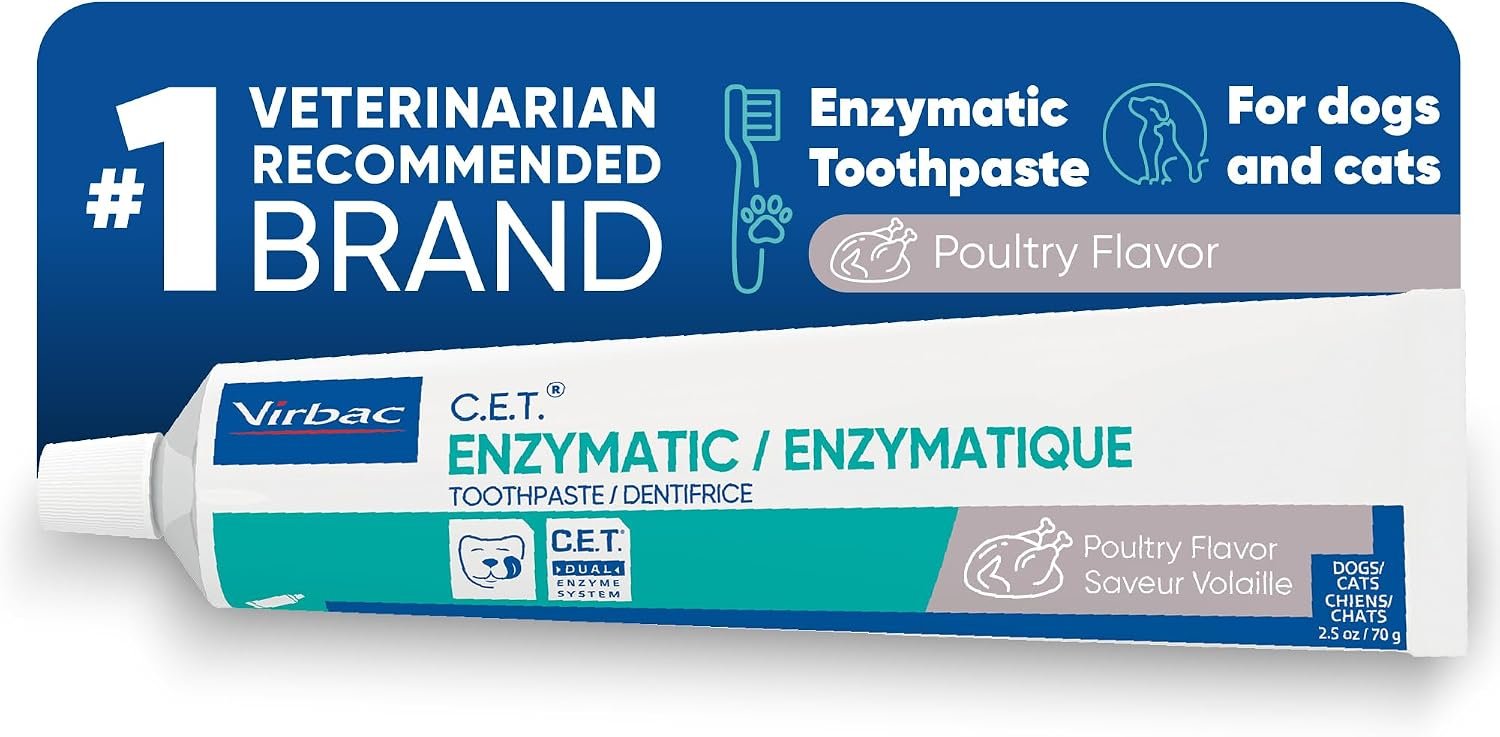
C.E.T. Enzymatic Toothpaste for Dogs and Cats, Poultry, 2.5oz at a Glance
| Feature | Details |
|---|---|
| Brand | C.E.T. |
| Product Type | Enzymatic pet toothpaste |
| Flavor | Poultry |
| Size | 2.5 oz / 70 g |
| Pet Use | Dogs and cats |
| Formula | Dual-enzyme system |
| Main Use | Daily oral care |
| Form | Paste |
| Foaming Agents | None |
| Toothbrush | Soft-bristle pet toothbrush recommended |
| Product Code | CET101 |
| ASIN | B00RZDXA7K |
What Is C.E.T. Enzymatic Toothpaste?
C.E.T. Enzymatic Toothpaste is a pet toothpaste made by Virbac. It is designed for dogs and cats.
The main goal is simple. It helps support better oral hygiene at home.
The toothpaste uses a dual-enzyme system with glucose oxidase and lactoperoxidase. These enzymes are used to help control plaque and odor-causing bacteria.
It also has no foaming agents. That matters because pets do not rinse and spit like people do.
The poultry flavor is another key part of the product. Many pets enjoy meat-based flavors more than mint or human-style toothpaste flavors.
For pet owners, that can make the brushing process easier.
My Take on the C.E.T. Poultry Toothpaste
What I like most about this product is that it is made for the way pets actually use toothpaste.
You do not need your dog or cat to rinse its mouth after brushing. The formula is made for pets and is safe to swallow when used as directed.
The poultry flavor also makes more sense for many pets than a strong mint flavor. A dog may not care about minty freshness. It may care much more about a taste it likes.
The 2.5 oz tube is also a practical size for home use.
I would look at this toothpaste as part of a regular dental routine, not as a quick fix for serious dental problems. Brushing can help keep plaque under control, but it does not replace professional veterinary dental care when a pet already has major dental disease.
How Does C.E.T. Enzymatic Toothpaste Work?
The formula uses enzymes as part of its oral-care system.
One important enzyme is glucose oxidase. The other is lactoperoxidase. Together, they are part of the dual-enzyme system used in the toothpaste.
The formula is also made with mild abrasive ingredients. These can help with cleaning during brushing.
The basic idea is simple:
- Put a small amount of toothpaste on a soft pet toothbrush.
- Gently brush your pet’s teeth.
- Focus on the outer tooth surfaces.
- Use it regularly.
- Follow your veterinarian’s advice if your pet has dental issues.
Regular brushing is the important part.
Using a good toothpaste once in a while will not do as much as building a simple routine.
Poultry Flavor: Is It Good for Pets?
The poultry flavor is one of the main reasons I would consider this toothpaste for a pet that dislikes normal toothpaste.
Dogs often respond well to meat-based flavors. Cats can also be very selective about taste and smell.
A toothpaste that your pet accepts is much easier to use than one that your pet tries to avoid.
That does not mean every dog or cat will love the poultry flavor. Pets have different tastes.
Still, poultry is a practical choice if your pet does not like mint-style flavors.
There are also other C.E.T. flavors, but this review focuses on the 2.5 oz poultry version.
Is It Safe for Dogs and Cats?
C.E.T. Enzymatic Toothpaste is made for both dogs and cats. It also contains no foaming agents.
It is designed to be swallowed during normal use, so you do not need to make your pet rinse after brushing.
However, it is still a pet dental product. It should be used as directed.
Keep the tube away from children and pets when it is not being used. If your pet has a known food sensitivity or another special health need, check the ingredient list and ask your veterinarian before use.
If your pet has bleeding gums, loose teeth, severe bad breath, swelling, pain, or trouble eating, toothpaste alone is not the answer. A veterinary exam is a better step.
C.E.T. Toothpaste Ingredients
The poultry formula contains ingredients such as:
- Sorbitol
- Purified water
- Dicalcium phosphate anhydrous
- Hydrated silica
- Glycerin
- Poultry digest
- Dextrose
- Xanthan gum
- Titanium dioxide
- Sodium benzoate
- Potassium thiocyanate
- Glucose oxidase
- Lactoperoxidase
The two enzymes are an important part of the formula.
The poultry flavor also comes from poultry digest, which helps explain why this version has a meat-based taste.
If your pet has food allergies, always check the full ingredient list before using it.
How to Use C.E.T. Enzymatic Toothpaste
For best results, the toothpaste is intended for regular use.
A soft-bristled pet toothbrush is a good choice. Start slowly if your pet is new to brushing.
Do not try to brush the whole mouth on the first day.
Instead, let your pet smell the toothpaste first. You can let your pet taste a tiny amount. Once your pet seems comfortable, start with a few teeth.
Then slowly increase the brushing time.
A calm routine is better than forcing the process.
Daily brushing is generally recommended, or you can follow the schedule given by your veterinarian.
What I Like About It
There are several things that make this toothpaste stand out.
Made for Dogs and Cats
You can use the same type of toothpaste for both dogs and cats. That is useful for homes with more than one kind of pet.
Poultry Flavor
The poultry flavor may be easier for some pets to accept than human-style mint flavors.
Enzyme-Based Formula
The dual-enzyme system gives this toothpaste more than just a flavoring role. It is designed to support plaque control and oral hygiene.
No Foaming Agents
Pets do not brush and rinse like people. A non-foaming formula is a practical choice for them.
Easy to Add to a Routine
The tube is small and simple to store. It can be used with a soft-bristle toothbrush.
Useful for Daily Dental Care
Regular brushing is one of the easiest ways to support your pet’s dental hygiene at home.
Pros
- Made for both dogs and cats
- Poultry flavor may appeal to many pets
- Uses a dual-enzyme system
- No foaming agents
- Safe to swallow when used as directed
- Helps support plaque control
- Helps freshen pet breath
- Available in a convenient 2.5 oz tube
- Easy to use with a soft pet toothbrush
- Good choice for a regular home dental routine
Cons
- Some pets may not like the poultry flavor
- A 2.5 oz tube may not last as long in a multi-pet home
- Toothbrushing can still be hard with resistant pets
- It does not replace professional dental cleaning
- The ingredient list may not suit pets with certain food sensitivities
- It needs regular use to be useful
Who Should Buy C.E.T. Enzymatic Toothpaste?
I think this toothpaste makes the most sense for pet owners who want a simple way to add brushing to a dog’s or cat’s daily routine.
It is especially worth considering if:
- Your pet dislikes mint-flavored toothpaste.
- You want one toothpaste for dogs and cats.
- You want an enzyme-based formula.
- You want a non-foaming pet toothpaste.
- Your pet already accepts tooth brushing.
- You want to work on daily plaque control at home.
It can also be a good starting point for someone who wants to take pet dental care more seriously.
Who Should Not Buy It?
This may not be the best choice for every pet.
I would be more careful if your pet has a known poultry allergy or food sensitivity. The poultry version contains poultry digest, so checking the ingredients is important.
I also would not buy this expecting it to fix severe dental disease.
If your pet has heavy tartar, painful gums, loose teeth, swelling, or another serious mouth problem, talk to a veterinarian.
Toothpaste is for home care. It is not a replacement for veterinary treatment.
C.E.T. Enzymatic Toothpaste vs. Human Toothpaste
You should not use normal human toothpaste for your dog or cat unless a veterinarian specifically tells you to do so.
Human toothpaste is made for people. Pets have different needs.
C.E.T. Enzymatic Toothpaste is made specifically for dogs and cats. It does not require the pet to rinse after brushing.
That makes it much more practical for normal pet dental care.
C.E.T. Enzymatic Toothpaste for Dogs and Cats, Poultry, 2.5oz Reviews: What Do Pet Owners Say?
The overall customer feedback for this product is generally positive.
Many pet owners like the poultry taste because it can make brushing easier. Some users also report that their pets accept the toothpaste well.
Another common benefit is the fresh-breath effect.
Of course, customer results can vary. A toothpaste that works well for one dog may not be a favorite for another.
The biggest factor is often whether the pet accepts the brushing routine.
Is the 2.5 oz Size Enough?
The 2.5 oz tube contains about 70 grams of toothpaste.
For one small pet, that can be a useful size for regular home use.
How long it lasts will depend on how much toothpaste you use and how often you brush.
A home with several pets may go through a tube faster.
I like the size for people who want to try the product without buying a very large tube.
Tips for Easier Pet Tooth Brushing
If your pet fights the toothbrush, do not rush.
Try these simple steps:
Start With Your Finger
Let your pet get used to having your finger near the teeth and gums.
Introduce the Taste
Let your pet smell and taste a small amount of toothpaste.
Use a Soft Brush
A soft pet toothbrush can make the process more comfortable.
Start Small
Brush only a few teeth at first.
Keep Sessions Short
A short and calm session is better than a long struggle.
Build a Routine
Try to brush at about the same time each day.
Give Praise
A calm voice and praise can help your pet connect brushing with a positive experience.
Frequently Asked Questions
Is C.E.T. Enzymatic Toothpaste safe for dogs?
Yes. It is made for dogs and is designed to be safe for pets to swallow when used as directed.
Can cats use C.E.T. Poultry Toothpaste?
Yes. The toothpaste is formulated for both dogs and cats.
Can I use human toothpaste on my dog?
It is better to use toothpaste made specifically for pets. Human toothpaste is not designed for dogs.
Does C.E.T. toothpaste help with bad breath?
It is designed to help freshen breath and control odor-causing bacteria as part of regular oral care.
Does it remove tartar?
Brushing can help control plaque and support dental hygiene. It should not be viewed as a cure for heavy existing tartar.
How often should I use C.E.T. toothpaste?
Daily use is recommended, or you can follow your veterinarian’s instructions.
Does C.E.T. toothpaste foam?
No. The formula does not contain foaming agents.
Does my pet need to rinse after brushing?
No. Pets do not need to rinse and spit like people.
Is the poultry flavor good for picky pets?
It may help because many pets prefer savory flavors. Still, every pet is different.
Can cats and dogs share the same tube?
Yes. The toothpaste is formulated for both dogs and cats.
Is C.E.T. toothpaste enough for complete dental care?
No. Home brushing is only one part of pet dental care. Regular veterinary checks are also important.
What if my pet has bleeding gums?
Do not rely on toothpaste alone. Bleeding, swelling, pain, loose teeth, or severe bad breath can be signs of dental problems that need veterinary attention.
Final Verdict
After looking closely at the formula, size, intended use, and key features, C.E.T. Enzymatic Toothpaste for Dogs and Cats, Poultry, 2.5oz looks like a solid option for everyday pet dental care.
The biggest strengths are easy to understand.
It is made for dogs and cats. It has a poultry flavor. It uses a dual-enzyme system. It does not foam. It is designed to be swallowed during normal use.
I especially like the idea of using a pet-friendly flavor because getting a pet to accept brushing is often half the battle.
Still, this is not a magic solution. Regular use matters. A good toothbrush matters. Your pet’s dental health also needs proper veterinary care when problems are already present.
Overall, I would consider C.E.T. Poultry Enzymatic Toothpaste a good choice for pet owners who want a simple, pet-specific toothpaste for regular home brushing. If your dog or cat accepts the poultry flavor, it can make a normally difficult routine much easier.