
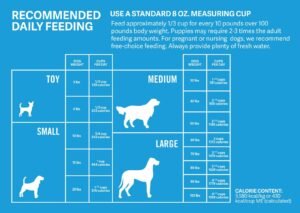
A large dog weighing 60 to 100 pounds typically eats 3 to 4.5 cups of dry food daily, split into two meals.
The one thing that decides whether this goes well or badly is measuring by volume instead of weight. A cup of dense kibble holds far more calories than a cup of airy pieces, so scooping blindly leads to overfeeding.
Skipping the calorie count on the bag is where things go wrong fast.
Measuring daily portions for a large dog
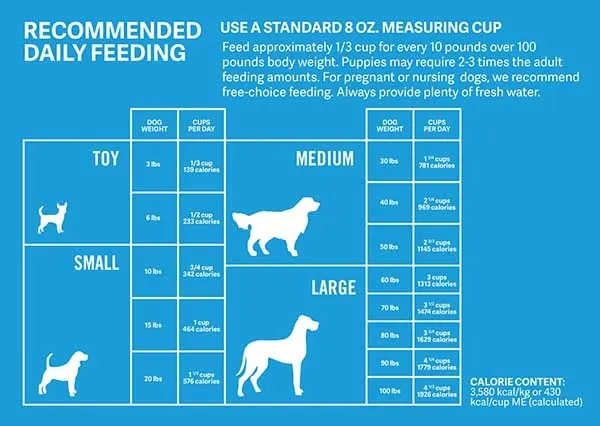
These steps assume standard dry kibble at roughly 350 to 400 calories per cup. If your food is denser or lighter, check the kcal/cup number printed on your bag’s label and adjust the volume down or up accordingly.
- Weigh your dog on a scale first thing in the morning before breakfast. Write down the exact number in pounds so you can track changes over time.
- Check the feeding chart on your specific food bag for your dog’s current weight. Use that amount only as a starting point, not a final rule.
- Divide the total daily amount into two equal meals. Feeding twice a day keeps energy steady and lowers the risk of bloat, which large breeds are prone to. Tip: Don’t leave the bowl out all day. Pick it up after 15 minutes so you know exactly what they actually ate.
- Adjust the portion based on your dog’s body shape. If you can’t feel their ribs easily under a thin layer of fat, cut back by 10%. If their ribs show sharply, add 10%.
- Account for treats by reducing their main meals. Treats shouldn’t make up more than 10% of their total daily calories, according to guidelines from the FDA on pet nutrition.
- Re-weigh your dog every two weeks during any diet change. If the scale isn’t moving toward your goal after a month, talk to your vet before cutting more food.
If your dog has a medical condition like diabetes or kidney disease, don’t adjust portions yourself. A veterinarian needs to set those numbers based on bloodwork.
How long adjusting large dog food takes
Changing portions isn’t instant, because a dog’s metabolism shifts slowly when you alter their intake.
| Situation | How long | What changes it | What to watch for |
|---|---|---|---|
| Switching brands entirely | 7–10 days | Kibble density and calorie count | Loose stool or vomiting |
| Cutting calories for weight loss | 2–4 weeks | Starting weight and exercise level | Ribs becoming easier to feel |
| Increasing food for an active dog | 1–2 weeks | Hours spent running or working | Weight staying flat despite effort |
| Moving from puppy to adult food | 7 days | Age and growth rate slowing down | Skipping meals or leaving kibble |
If your dog hasn’t reached their target weight after four weeks on a measured plan, stop guessing. Call your vet to check for thyroid issues or other hidden problems.
Signs your large dog eats enough
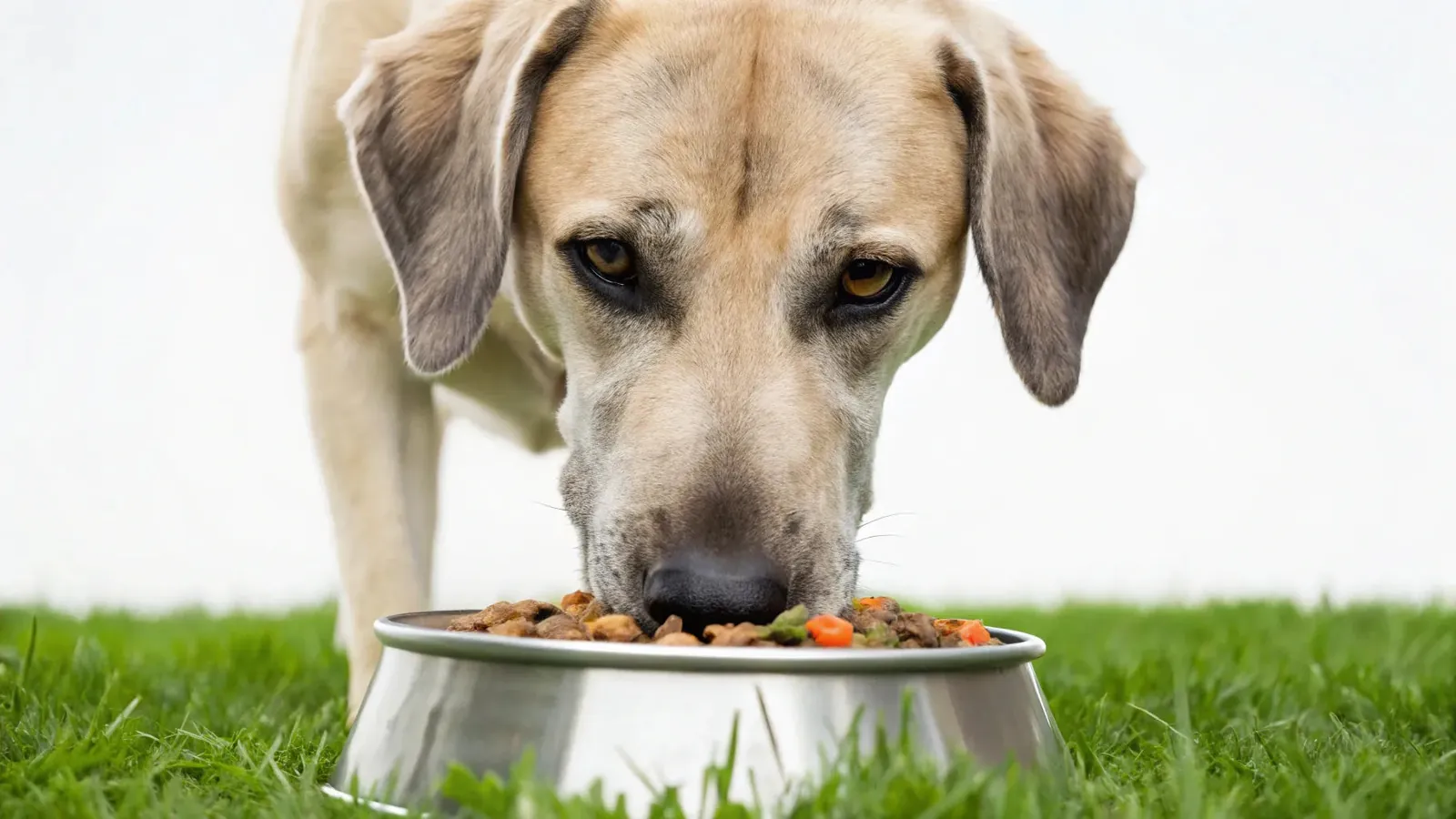
You can’t just trust the bag’s chart, because every dog burns calories differently based on their muscle mass and daily movement.
Run your hands along their sides while they stand relaxed. You should feel the ribs under a thin layer of fat, but they shouldn’t stick out sharply. Look down at them from above; a visible waist behind the ribs means the portion is right.
If the signs disagree—say the chart says 4 cups but the dog looks heavy—trust the body condition over the printed number. The World Small Animal Veterinary Association publishes a body condition score chart you can use to settle the argument.
Portion mistakes that ruin large dog diets
- Guessing the cup size. Using a coffee mug instead of a standard 8-ounce measuring cup adds hundreds of hidden calories daily. Buy a proper scoop marked in cups and use only that one.
- Ignoring treat calories. Handing out five or six training biscuits while keeping the dinner bowl full pushes a dog over their limit. Subtract the treat calories from the main meal before you pour it.
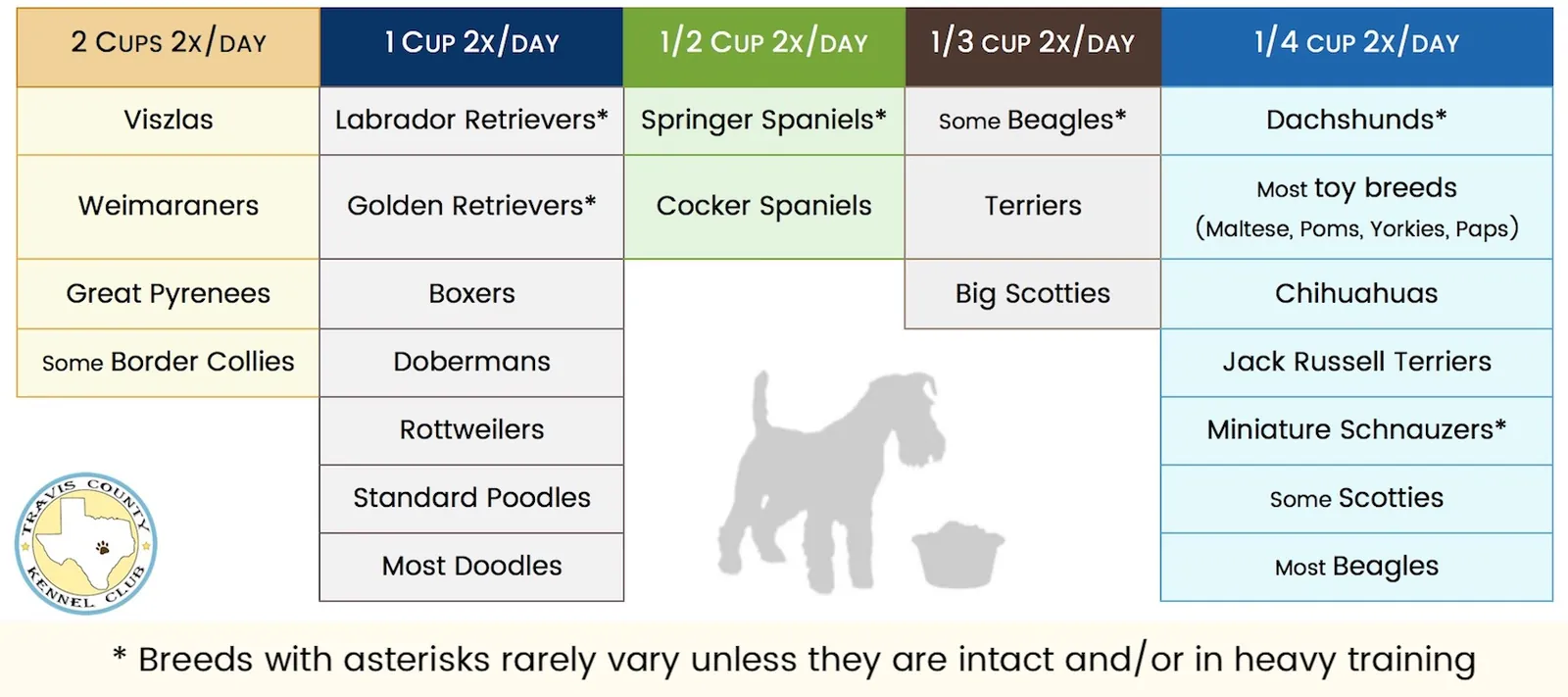
- Following the bag blindly. The chart on the bag assumes an average dog, but yours might be older or less active. Start at the lower end of the range if your dog mostly sleeps indoors.
- Free-feeding all day. Leaving a giant bowl out invites boredom eating and makes tracking impossible. Serve two timed meals and pick up whatever they don’t finish within 15 minutes.
Frequently asked questions
How many times a day should a large dog eat?
Twice a day is best for most large dogs. Splitting the food into a morning and evening meal prevents them from eating too fast, which lowers the risk of bloat. Puppies under six months might need three smaller meals instead.
Can I mix wet and dry food for my large dog?
Yes, you can mix them, but you have to count the calories from both. One standard 13-ounce can of wet food often replaces about 1 to 1.5 cups of dry kibble. Check the labels on both cans and bags to do the math.
Why is my large dog always hungry after eating?
Some breeds just have big appetites, but constant hunger can also mean parasites or poor-quality food that lacks nutrients. If your dog finishes their bowl instantly and begs constantly, ask your vet to run a basic health check.
Is it safe to feed a large dog once a day?
It’s generally not recommended for large or giant breeds. Eating one huge meal stretches the stomach and increases the risk of gastric dilatation-volvulus, commonly called bloat. Two smaller meals keep their digestion safer and steadier.
How long does a 30-pound bag of dog food last?
For a 70-pound dog eating 3.5 cups daily, a 30-pound bag lasts about 25 to 30 days. This assumes standard kibble weighing roughly 4 ounces per cup. Denser foods will empty the bag faster.
What happens if I overfeed my large dog?
Extra weight puts severe stress on their joints, hips, and heart. Large breeds are already prone to arthritis, and carrying even 5 extra pounds speeds up that damage significantly. Stick to measured portions.
Conclusion
Every dog’s body is different, so watch how your pet looks and feels over the next few weeks. If they’re gaining weight or acting sluggish, it’s a good idea to check in with your vet. They’ll help you fine-tune things for a happy, healthy companion.