
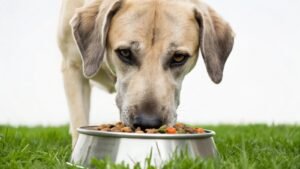
A large dog typically eats 3 to 4 cups of dry food daily, but the amount a large dog should eat depends entirely on their specific weight and the calorie density printed on your bag. A 70-pound active adult needs roughly 1,600 calories daily, while a senior may need only 1,200.
How much food a large dog should eat
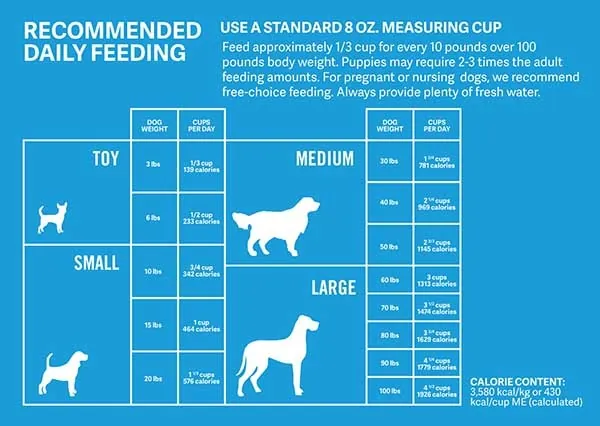
Feeding guidelines on packaging are starting points based on average metabolism, not absolute rules for your individual pet.
- Weigh your dog using a calibrated scale at the same time each morning before feeding. Record this number weekly because visual estimation fails with thick-coated large breeds; if your dog exceeds 80 pounds and won’t stand still, visit a vet clinic for an accurate baseline measurement.
- Find the metabolizable energy (ME) listed as kcal/cup or kcal/kg on your current food bag. The National Research Council nutrient requirements provide baseline formulas, but your specific product’s tested energy content is the only number that matters for portion math.
- Multiply your dog’s ideal body weight in kilograms by 30, then add 70 to the result to get resting energy requirement. Adjust this base number by multiplying by 1.6 for active adults, 1.4 for seniors, or 1.2 for overweight dogs needing weight loss support.
- Divide total daily calories needed by the kcal/cup value from step two to get exact cup measurements. Round down slightly if your dog tends toward obesity, and split this amount into two equal meals to prevent bloat in deep-chested large breeds. Tip: Never use drinking glasses or random scoops as measuring tools. Buy a dedicated measuring cup marked for pet food, as standard kitchen cups often differ by 10-15% from manufacturer standards.
- Track body condition score every two weeks by feeling ribs without pressing hard and checking for a visible waist tuck. Increase portions by 10% if ribs become prominent; decrease by 10% if waist disappears or fat pads form at tail base.
Feeding times for large breeds
Puppies and working dogs require separate calculations based on growth stage or workload. Splitting meals reduces gastric torsion risk, so avoid feeding the entire daily amount in one sitting.
| Situation | Daily Amount | What Changes It | What to Watch For |
|---|---|---|---|
| Active adult (70 lb) | 3.5–4 cups | Exercise duration exceeds 60 min | Ribs visible, high energy |
| Senior (70 lb) | 2.5–3 cups | Reduced metabolism, joint pain | Weight gain, stiff movement |
| Overweight (70 lb) | 2–2.5 cups | Body condition score above 6/9 | Waist absent, breathing heavy |
| Working/giant breed | 4–6+ cups | Job intensity, cold weather exposure | Muscle loss, fatigue signs |
| Spayed/neutered adult | 3–3.5 cups | Hormonal metabolic shift post-surgery | Gradual fat accumulation |
If your dog finishes meals instantly yet gains no weight after three weeks, consult your veterinarian.
Signs your large dog eats enough
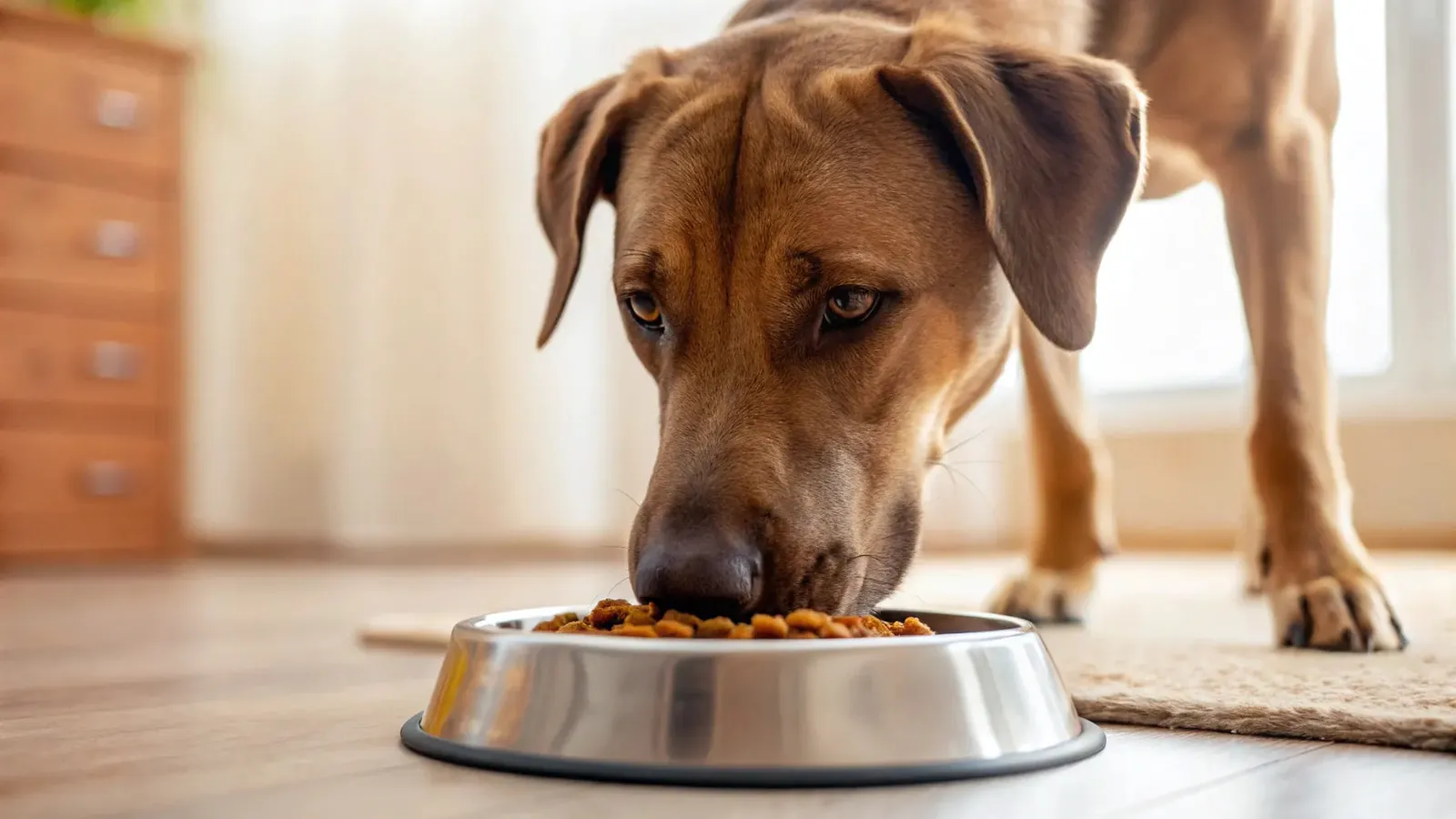
Body condition scoring beats any chart because individual metabolism varies too widely for universal tables.
Energy levels matching breed expectations complete the picture. A well-fed large dog maintains steady enthusiasm for walks and play without crashing midday or begging obsessively.
Common large dog feeding errors
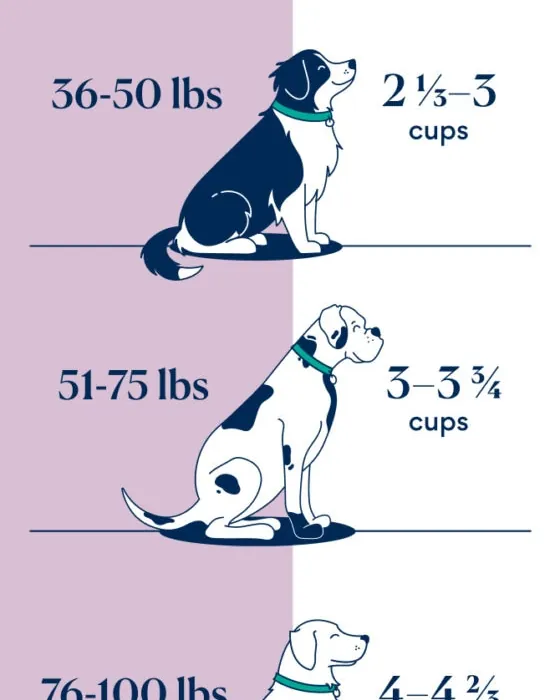
- Free-feeding kibble all day: Large dogs prone to bloat face life-threatening risk when eating rapidly from constantly full bowls, and grazing masks true appetite changes signaling illness. Measure exact portions twice daily and remove uneaten food after twenty minutes to establish safe eating patterns and monitor health.
- Ignoring treat calories during training: Ten medium biscuits can equal a significant portion of daily needs for a 70-pound dog, causing silent obesity despite perfect meal measurements. Deduct training rewards from dinner portions or use low-calorie options like green beans to maintain nutritional balance without sacrificing reinforcement.
- Switching foods without recalculating: New formulas often differ by 50-100 kcal/cup from previous brands, making old portion sizes dangerously wrong even when cup measurements appear identical. Always recalculate using the new bag’s ME value and transition gradually over seven days to avoid digestive upset.
- Feeding puppy food past maturity: Giant breeds mature slower than small dogs but still reach adult maintenance needs by eighteen months; continued puppy formula provides excess calcium and phosphorus risking skeletal damage. Transition to adult large-breed formula once growth plates close per veterinary confirmation.
Frequently asked questions
How many cups should a 100 pound dog eat?
A 100-pound adult dog typically eats 4 to 5 cups daily, assuming 350-400 kcal/cup food and moderate activity. This drops to 3-4 cups for seniors or less active dogs. Always verify using your specific bag’s calorie count and adjust based on monthly body condition assessments.
Can I feed my large dog once a day?
No, feeding large dogs once daily significantly increases gastric dilatation-volvulus risk compared to twice-daily meals. Split total daily portions into morning and evening servings spaced eight hours apart to reduce stomach distension and improve digestion safety.
Why is my large dog always hungry?
Persistent hunger despite adequate portions often signals low-fiber diets, parasites, diabetes, or thyroid disorders rather than true caloric deficit. If begging continues after two weeks of correct feeding, schedule veterinary bloodwork to rule out medical causes.
Is grain-free food better for large dogs?
No evidence supports grain-free superiority for large breeds unless diagnosed allergies exist. Choose AAFCO-approved complete diets meeting large-breed nutrient profiles regardless of grain content, and discuss heart health screening with your veterinarian if currently feeding boutique formulations.
How do I know if I’m overfeeding my large dog?
Visible fat deposits over ribs, lost waist definition, and difficulty grooming hindquarters signal overfeeding. Reduce daily amount by 10% and reassess body condition after three weeks rather than waiting for obvious obesity.
Should large breed puppies eat special food?
Yes, large-breed puppy formulas contain controlled calcium-phosphorus ratios preventing rapid bone growth that causes hip dysplasia and angular limb deformities. Feed labeled large-breed puppy food until eighteen months or veterinary confirmation of growth plate closure, never adult maintenance formulas during development.
Conclusion
Portions serve as baselines requiring individual adjustment through regular observation and measurement. Your dog’s changing needs across seasons, aging, and health shifts demand ongoing attention rather than set-and-forget routines, so trust physical indicators over static numbers and partner with your veterinarian for lasting nutritional success.