
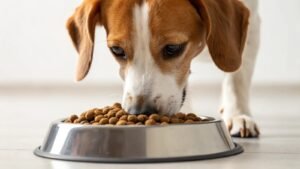
Royal Canin Giant Adult dry food has the largest kibble, measuring about 20 millimeters across, making it the standard commercial bag with the biggest pieces.
Don’t buy giant-breed food for a medium dog just to slow them down. The calorie density and mineral balance in those formulas are set for massive frames, and feeding them to a smaller dog risks serious joint and organ problems over time.
Choosing dog food with the largest kibble
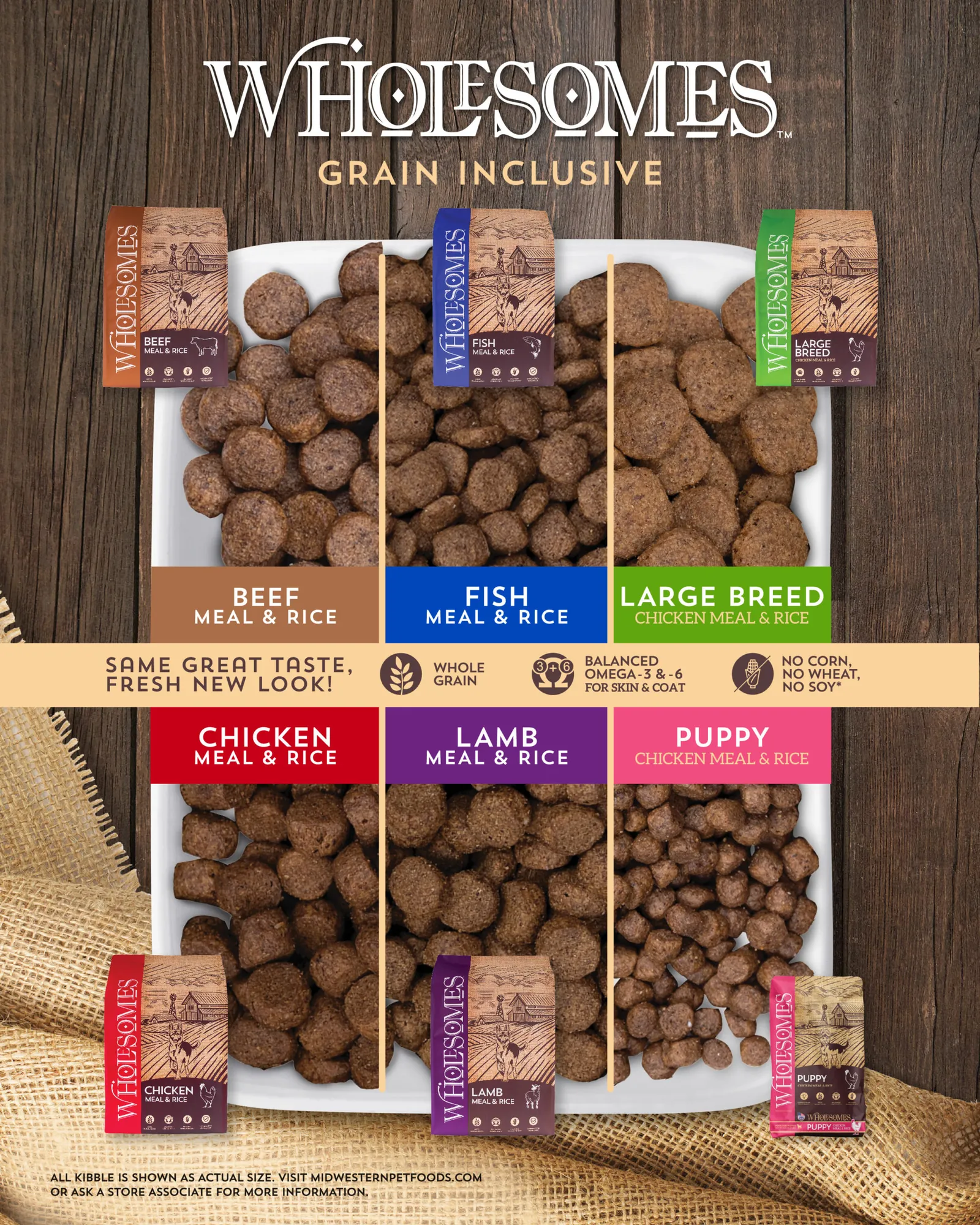
Finding the biggest piece isn’t enough on its own. If your dog weighs over 100 pounds, go with a giant-breed formula; if they fall between 55 and 100 pounds, stick to a large-breed version instead.
Here are the steps to pick and serve the right one:
- Weigh your dog and measure their muzzle width with a soft tape. You need these two numbers before you look at any bag.
- Match the weight to the breed-size label on the bag. “Giant” means over 100 pounds as an adult, while “Large” covers 55 to 100 pounds.
- Check the kibble diameter printed on the manufacturer’s website or packaging. Royal Canin lists exact dimensions for every formula they sell.
- Buy a small bag first, or ask your local pet shop for a sample scoop. You need to see the physical piece before committing to a 30-pound sack.
- Put three pieces in their bowl and watch them eat. They should bite each piece at least once.
- Adjust if they spit it out or try to swallow it whole. If they gag, the piece is too big; switch to the next size down.
Tip: Don’t soak giant kibble in water unless your vet tells you to. Soaking defeats the purpose of the size, turning it into a mush they can lap up without chewing.
If your dog has dental disease or missing teeth, this approach won’t work. A veterinary dentist needs to evaluate their mouth before you force them to chew hard, oversized pieces.
How long giant breed kibble takes to digest
Digestion speed changes based on the kibble size, your dog’s weight, and their activity level. Bigger pieces take longer to break down due to less surface area exposed to stomach acid.
| Situation | Digestion time | What changes it | What to watch for |
|---|---|---|---|
| Giant breed (over 100 lbs) eating large kibble | 8 to 10 hours | Activity level, age | Firm, regular stools |
| Large breed (70 lbs) eating giant kibble | 10 to 14 hours | Kibble too big to crush properly | Gagging, vomiting whole pieces |
| Giant breed eating standard small kibble | 4 to 6 hours | Food swallowed without chewing | Bloated belly, rapid weight gain |
| Senior giant breed on large kibble | 12 to 14 hours | Slower metabolism, weaker jaws | Constipation, loss of appetite |
These times assume a healthy adult dog resting after a meal. If digestion seems stuck past 14 hours and your dog looks uncomfortable, call your vet immediately.
Signs the kibble size fits your dog
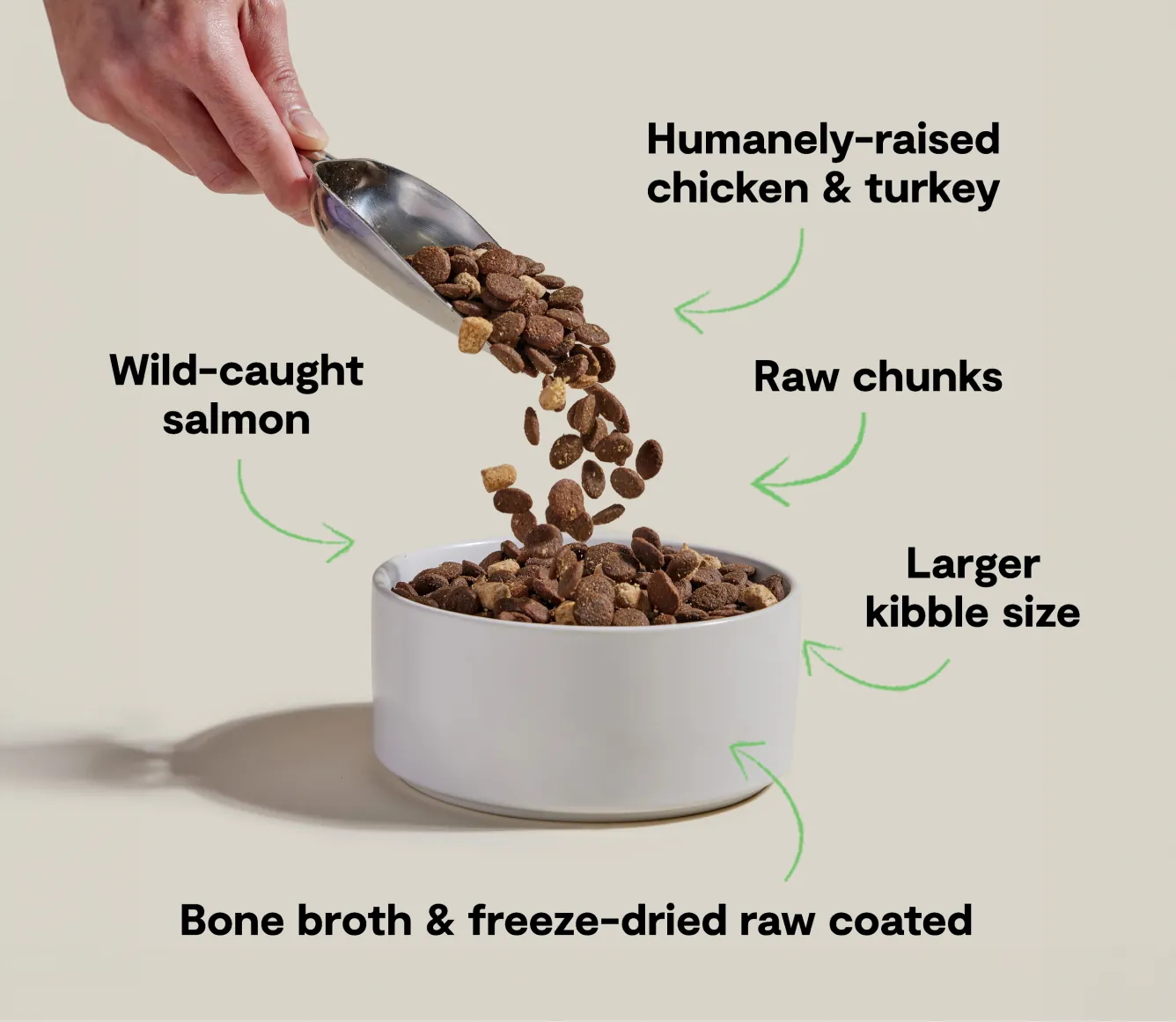
You can tell the size is right by watching your dog eat their first few meals. They should pick up a single piece, crack it with their back teeth, and chew it two or three times before swallowing.
If they drop pieces repeatedly, the kibble is likely too heavy or wide. Switch to the next size down. Your dog’s actual jaw measurement decides the limit, not the weight printed on the bag.
Mistakes that ruin giant breed feeding
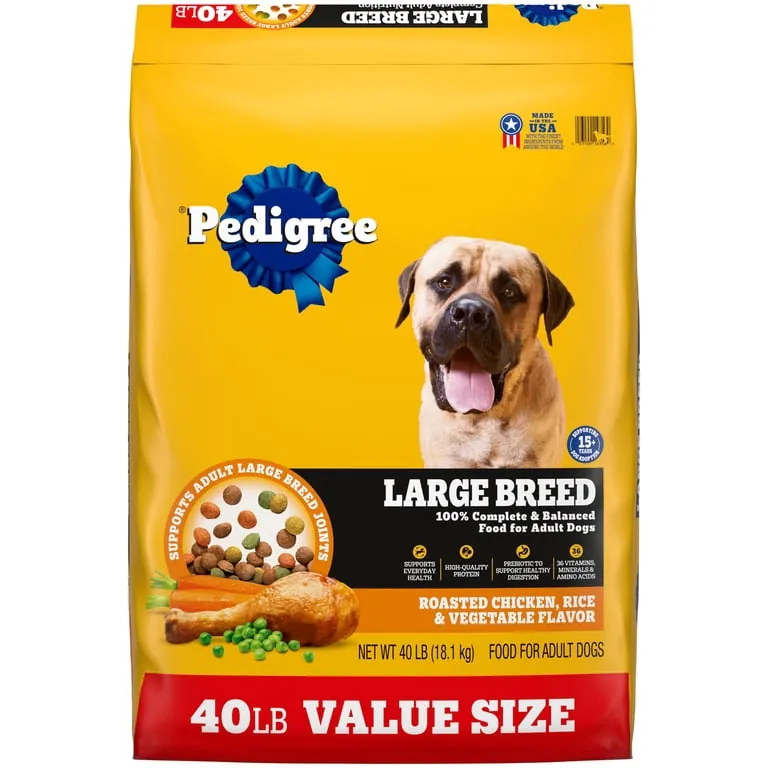
- Buying giant kibble for a medium dog. It causes choking because the dog physically can’t fit the piece between their molars. Buy the formula matched to their actual adult weight class.
- Crushing the pieces with a hammer. It destroys the mechanical cleaning action meant to scrape plaque off their teeth. Serve the pieces whole, or switch to a smaller commercial size instead.
- Ignoring the calorie density. Giant-breed foods pack more calories per cup to support massive bones, so feeding a full cup to a smaller dog leads to rapid obesity. Read the feeding chart on the bag and weigh the food on a kitchen scale.
- Leaving a deep bowl out all day. Free-feeding large breeds raises the risk of gastric dilatation-volvulus, commonly called bloat. Split their daily amount into two measured meals served in a shallow dish.
This method doesn’t suit dogs with advanced kidney disease or severe dental pain.
Frequently asked questions
Why do giant dogs need bigger kibble?
Bigger pieces force large dogs to chew instead of inhaling their food. Gulping air along with small pellets increases the risk of bloat, a deadly stomach twisting common in deep-chested breeds like Great Danes. Chewing also slows down the meal.
Can I feed large kibble to a puppy?
No. Puppies have smaller jaws and baby teeth that can fracture on oversized, hard pieces. Feed a puppy-specific formula until they reach their adult size, then transition slowly to the larger kibble over seven days.
How big is Royal Canin Giant kibble?
It measures roughly 20 millimeters in diameter, shaped like a thick disc. Smaller dogs will struggle to fit it comfortably inside their mouths.
Is it safe to soak large kibble in water?
It’s safe, but it ruins the main benefit. Only soak it if a veterinarian recommends it for a specific medical condition.
What happens if my dog swallows it whole?
Swallowing unchewed pieces can cause choking, vomiting, or poor nutrient absorption. The stomach struggles to break down a solid mass quickly. If your dog gulps it down, the kibble is too large for them.
Does large kibble clean a dog’s teeth?
It helps reduce tartar buildup slightly by scraping the tooth surface during chewing. However, it doesn’t replace brushing or professional veterinary cleanings. Think of it as a helpful addition, not a complete dental care routine.
Conclusion
Picking the right size comes down to measuring your dog’s mouth and matching it to the manufacturer’s specifications. Don’t guess based on the picture on the front of the bag. Open it, hold a piece against their teeth, and watch them eat. That simple check prevents choking, protects their digestion, and ensures they actually get the nutrients you paid for.