
As an Amazon Associate, we earn from qualifying purchases. This post contains affiliate links – if you buy through them, we may earn a commission at no extra cost to you.
There isn’t one single best dog food for dogs with digestive problems. There’s only the right one for your dog’s specific stomach issue, their daily routine, and what they’ve already eaten without trouble. What splits these options isn’t quality alone; it’s whether a dog needs fewer ingredients, more fiber, or a different protein source like fish instead of chicken. Some formulas target loose stool quickly, while others aim for long-term gut balance over weeks. If your dog struggles with regular upset, Hill’s Sensitive Stomach covers everyday maintenance, but if you need fast results for loose stool, Hill’s GI Biome is where most buyers end up.
1. Hill’s Science Diet Sensitive Stomach & Skin Dry Dog Food

Best for: adult dogs needing steady daily meals that won’t upset their stomach.
A sensitive stomach usually means a dog can’t handle heavy or complex recipes every day. This formula uses high-quality chicken as its first ingredient and adds prebiotic fiber to keep digestion gentle. That fiber helps nutrients absorb better instead of passing straight through.
It provides 27 key nutrients for complete adult nutrition. It’s made in the USA with global ingredients and includes clinically proven antioxidants.
Good if:
- Your dog eats the same dry kibble every single day.
- You want a recipe that supports both stomach and coat health.
- Your dog does well with chicken as a main protein.
Skip it if:
- You have a puppy that needs specific growth nutrition.
- Your dog requires a vet-prescribed therapeutic diet for acute illness.
2. Hill’s Prescription Diet GI Biome Digestive/Fiber Care Dry Dog Food

Best for: dogs suffering from frequent loose stools that need quick relief.
When a dog has constant loose stool, you need something that works fast rather than slowly building gut health. This prescription diet is clinically shown to help firm loose stool in 24 hours and reduce the risk of it coming back. It uses proprietary ActivBiome+ technology designed to rapidly activate beneficial gut bacteria.
Because it’s a prescription diet, you must consult your vet before feeding it to your dog.
Good if:
- Your vet has recommended a therapeutic diet for gut issues.
- Your dog struggles with recurring bouts of loose stool.
- You need a scientifically backed formula for microbiome balance.
Skip it if:
- You want to switch foods without calling your veterinarian first.
- Your dog only has occasional mild stomach rumbling.
3. Purina Pro Plan Sensitive Skin & Stomach Dry Dog Food

Best for: dogs whose stomach issues are paired with dry, itchy skin.
Sometimes a bad stomach and a dull coat come from the exact same trigger, often a common protein. This formula uses real salmon as its first ingredient instead of beef or chicken, which changes things for dogs sensitive to land meats. Oatmeal is included because it’s easily digestible and naturally gentle on the digestive system. It’s fortified with guaranteed live probiotics to support both gut and immune health.
Sunflower oil rich in omega-6 fatty acids is added specifically to nourish the skin and coat. This helps when skin irritation happens alongside bathroom troubles. It was previously known as the FOCUS Sensitive Skin and Stomach recipe.
Good if:
- Your dog scratches constantly while also having soft stools.
- You prefer a fish-based protein over poultry.
- You want live probiotics baked directly into the kibble.
Skip it if:
- Your dog has a known sensitivity to fish or seafood.
- You’re strictly looking for a grain-free recipe.
4. Wellness CORE Digestive Health Adult Dry Dog Food
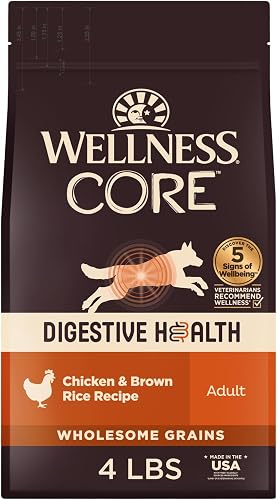
Best for: active dogs that need high protein without upsetting their stomach.
High-protein diets can sometimes be too rich for a sensitive gut, causing gas or discomfort. This recipe balances high-quality chicken protein with wholesome grains like brown rice to optimize nutrient absorption. Every piece of kibble is coated with probiotics and made with natural digestive enzymes.
It includes a blend of prebiotic fibers to maintain a healthy microbiome, which matters because 70% of a dog’s immune system lives in their gut. Omega fatty acids ensure the coat stays lustrous and soft.
Good if:
- Your dog needs plenty of protein for energy but digests it poorly.
- You trust probiotic-coated kibble for direct gut delivery.
- You prefer non-GMO ingredients sourced globally but made domestically.
Skip it if:
- You feed your dog a strict grain-free diet.
- Your dog doesn’t tolerate chicken well.
5. Open Farm Digestive Health Dry Dog Food

Best for: owners who prioritize simple, traceable wild-caught ingredients for daily feeding.
The listing focuses heavily on how gentle the food is, making it suitable for dogs that reject complex recipes. It comes in a 4lb bag, which is practical for smaller dogs or for testing if your dog accepts it.
Good if:
- You want a short, readable ingredient list centered around fish.
- Your dog needs a light meal that won’t cause heaviness.
- You’re introducing a new food slowly to a picky eater.
Skip it if:
- You need a comprehensive therapeutic formula with added enzymes.
- Your dog requires large-breed specific kibble sizing.
6. Nutrish Gentle Digestion Paté Wet Dog Food

Best for: older dogs or picky eaters who refuse to chew hard dry kibble.
Dry food can be tough on older teeth or simply unappealing to a dog feeling nauseous. This wet paté uses real chicken as the number one ingredient to provide a good protein source that supports healthy organs. Instead of relying solely on grains, it uses fiber from pumpkin, peas, and carrots to support digestion.
Good if:
- Your dog turns their nose up at crunchy brown pellets.
- You want vegetable-based fiber from pumpkin and carrots.
- You prefer buying wet food in bulk canned cases.
Skip it if:
- You rely on dry kibble to help scrape plaque off teeth.
- Your dog has a known allergy to chicken.
7. Stella & Chewy’s Freeze-Dried Raw Dog Food
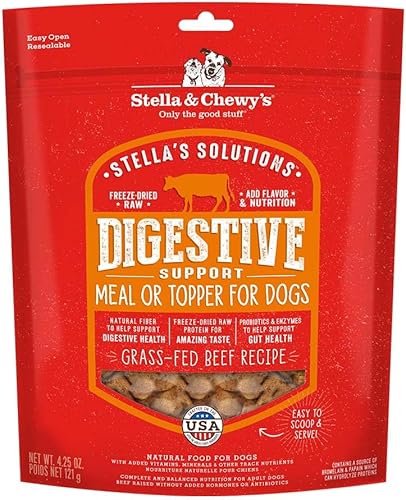
Best for: raw-diet feeders dealing with chronic gas and loose stools.
Raw diets are popular, but they don’t always agree with a compromised digestive system unless specifically designed for it. These freeze-dried morsels use responsibly sourced grass-fed beef combined with coconut flour and pumpkin. Natural papain from papaya and digestive enzymes are added to actively improve nutrient absorption. The brand states that 95% of pet parents report visible improvements in stool quality within days.
Good if:
- You want to feed a raw diet without handling fresh meat.
- Your dog needs a versatile topper to encourage eating.
- You value organic fruits and vegetables in the recipe.
Skip it if:
- You prefer the convenience of pouring traditional dry kibble.
- Your dog can’t tolerate beef.
8. Fromm Family Nutritionals Digestive Support Low Fat Dry Dog Food

Best for: dogs prone to pancreatitis or those requiring strictly low-fat meals.
This low-fat recipe uses hydrolyzed chicken and hydrolyzed chicken liver, meaning the proteins are broken down into smaller peptides. It features a specialized fiber blend including pumpkin, dried beet pulp, miscanthus grass, and chicory root.
Good if:
- Your vet told you to drastically reduce your dog’s fat intake.
- Your dog struggles to digest whole proteins normally.
- You appreciate a multi-strain biotic approach to gut health.
Skip it if:
- You have a highly active working dog that burns lots of fat.
- You’re feeding a growing puppy that needs dense calories.
9. Natural Balance Limited Ingredient

Best for: small breed dogs reacting badly to multiple common food ingredients.
The recipe is completely grain-free, which removes another common category of allergens from the bowl. It delivers a nutritious blend to support healthy skin and a shiny coat alongside digestion. Natural Balance notes the food is vet recommended for dependable daily nutrition. The listing specifies this formula is crafted for small breed dogs.
Good if:
- You have a small dog with a long list of food allergies.
- You want a grain-free recipe with minimal components.
- You suspect multiple ingredients are causing your dog’s distress.
Skip it if:
- You own a medium or large breed dog.
- Your dog needs grains for steady energy release.
10. IAMS Advanced Health Healthy Digestion Dry Dog Food

Best for: healthy adult dogs needing reliable daily fiber to stay regular.
Not every stomach issue is a medical crisis; sometimes a dog just needs better daily regularity. This formula uses real farm-raised chicken as the first ingredient and contains zero fillers. It relies on fiber from beet pulp and prebiotics to support nutrient absorption and healthy stools. The brand claims this highly digestible setup promotes “ideal poop” within 10 days of consistent feeding.
Good if:
- Your dog is generally healthy but occasionally irregular.
- You want a simple, complete meal without fillers.
- You prefer widely available brands for long-term consistency.
Skip it if:
- Your dog is experiencing a severe gastrointestinal emergency.
- You’re looking for exotic proteins or raw ingredients.
Also worth considering: Blue Chicken Dry Dog Food is another option focused on digestive care if you prefer the Blue Buffalo brand lineup.
Where These Overlap
Several of these foods share the same basic goal: adding prebiotics and gentle proteins to calm a dog’s stomach. If your dog just needs a gentler daily bowl, the choice between these three barely matters beyond whether you prefer chicken, salmon, or oatmeal.
Still Not Sure?
Will my dog eat this every single day?
Daily feeding requires a complete and balanced label, not just a temporary supplement. Hill’s Sensitive Stomach is built exactly for this kind of daily, long-term adult maintenance.
Does my dog react to chicken?
Many stomach issues trace back to a single protein your dog eats constantly. Purina Pro Plan Salmon replaces poultry entirely with fish and oatmeal for a cleaner slate.
Do I need a vet’s permission first?
Some digestive foods cross the line from grocery nutrition into medical treatment, requiring professional oversight. Hill’s GI Biome is a prescription diet designed specifically for that level of veterinary intervention.
If your dog deals with daily, mild stomach grumbles, Hill’s Sensitive Stomach handles routine maintenance with familiar ingredients. But if loose stool is disrupting your dog’s life right now, Hill’s GI Biome targets that specific problem with clinical backing. Review your dog’s current symptoms, pick the formula that matches their actual daily reality, and check the button below each pick to see today’s details.
Frequently Asked Questions
Do I need a vet prescription for Hill’s GI Biome dog food?
Yes, Hill’s Prescription Diet GI Biome is a therapeutic food formulated by veterinarians. The listing explicitly states you must consult your vet to ensure it’s right for your dog. Unlike Hill’s Science Diet Sensitive Stomach, which you can buy freely, this requires professional authorization because it treats specific gastrointestinal conditions.
Can I feed Stella & Chewy’s Beef to my puppy?
Yes, the listing states these freeze-dried raw morsels serve as a complete balanced meal for all life stages. This means it meets the nutritional requirements for growing puppies, not just adults. You can also use it as a topper for puppy kibble if you don’t want to transition them to a fully raw diet immediately.
Is Natural Balance Salmon dog food safe for large breed dogs?
No, the listing specifies this limited ingredient formula is crafted for small breed dogs. If you have a large dog with a sensitive stomach, you’d need to look at options like Fromm Digestive Support, which explicitly suits adult dogs of all breeds.
How does Fromm Digestive Support make chicken easier to digest?
Fromm uses hydrolyzed chicken and hydrolyzed chicken liver in this recipe. Hydrolysis breaks the proteins down into much smaller peptides and amino acids before your dog even eats them. This process supports efficient digestion and nutrient absorption, making it highly suitable for dogs whose systems struggle to process standard whole-meat proteins.
Conclusion
Start by mixing a small amount of the new food into your dog’s current bowl, and slowly increase it over a week. Watch their stool and energy each day. If things don’t settle, you’ll want to call your vet before trying another bag.