
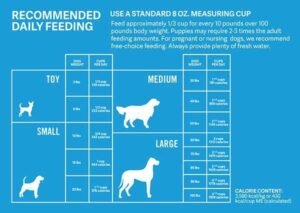
A big dog weighing 70 pounds needs about 3 to 4 cups of dry food daily. You’ll find exactly how much food a big dog needs on your bag’s feeding chart matched to your dog’s weight.
How much food a big dog needs
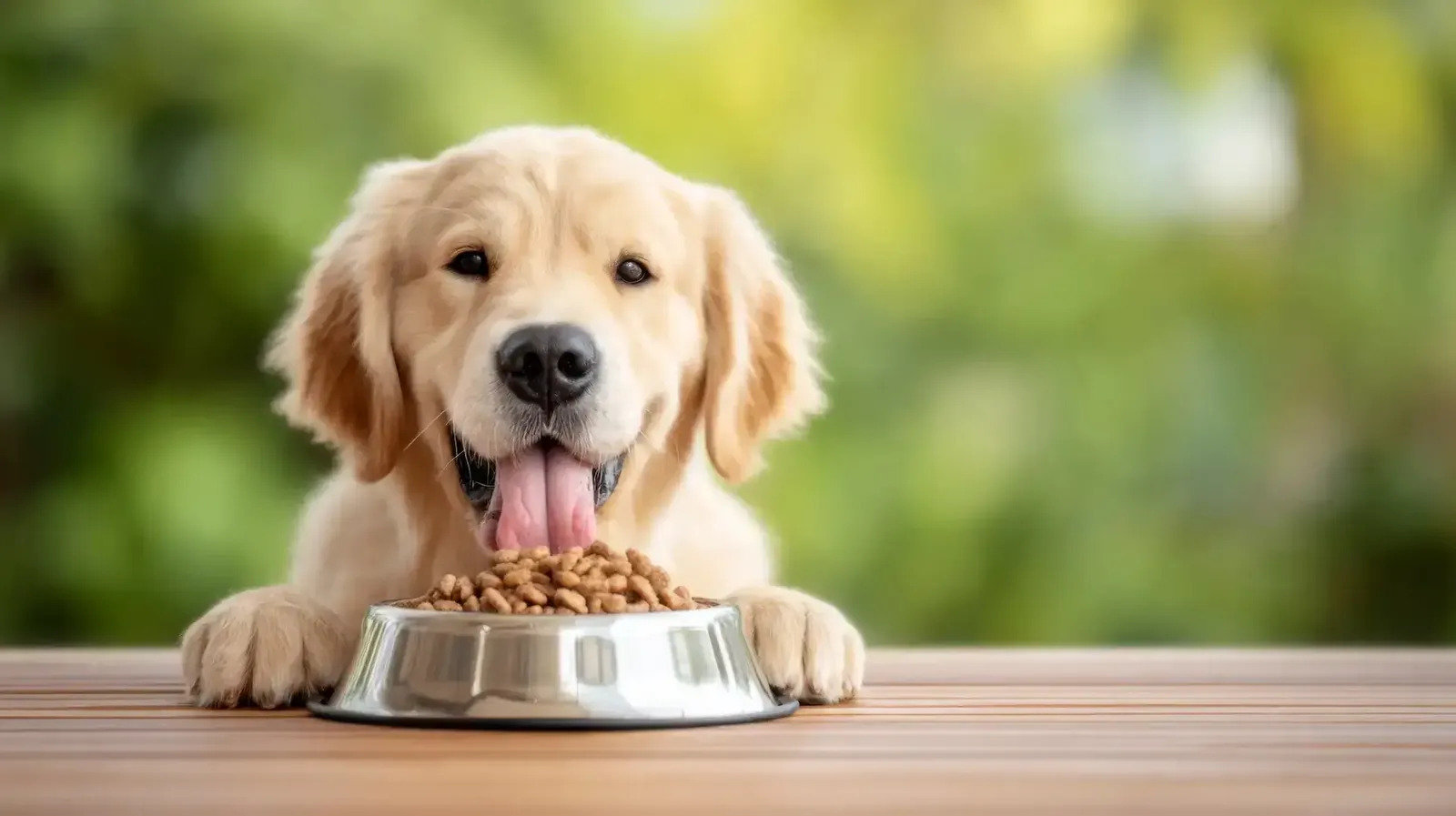
- A 70-pound adult dog eating dry kibble needs roughly 3 to 4 cups per day.
- Split that total into two meals, giving about 1.5 to 2 cups each time.
- Active working dogs burn more energy and often need 20% more than resting pets.
- Senior dogs over seven years old usually need 10% to 20% less food daily.
- Wet food portions are larger by volume because canned food holds about 75% water.
- Read the calorie count printed on your specific bag, since cup sizes vary between brands.
Why big dogs eat less per pound
Small dogs burn calories faster than large ones while they rest. A Chihuahua uses far more energy per pound just to stay warm and keep its heart beating. Feeding a 100-pound dog double a 50-pound dog’s portion causes weight gain.
That’s why feeding charts never go up in a straight line. The National Research Council publishes nutrient requirements for pet food charts. Their formulas show energy needs rise slower than body weight. Read their published tables through the National Academies Press for the exact math.
When big dog food amounts change
The standard cup count assumes a healthy, neutered adult living indoors. Changing these conditions alters the portion.
| Situation | What changes | What to do instead |
|---|---|---|
| Highly active working dog | Burns 20% more calories | Increase daily portion by 20% |
| Neutered indoor senior | Metabolism drops significantly | Reduce portions by 20% |
| Switching to wet food | Water adds heavy bulk | Follow the can’s weight chart |
| Pregnant large breed | Energy needs rise weekly | Increase food gradually each week |
| Dog under 1 year old | Still growing fast | Use puppy formula feeding guides |
| Overweight dog at vet | Needs safe fat loss | Cut current portion by 10% |
Steps to feed a big dog correctly
- Weigh your dog on a scale to get an accurate starting number in pounds.
- Find your dog’s exact weight on the feeding chart printed on your food bag.
- Note the suggested daily amount, which usually assumes a normal activity level indoors.
- Divide that total amount into two equal meals, one morning and one evening.
- Measure every serving with a standard measuring cup instead of scooping blindly from the bag.
- Check your dog’s ribs after three weeks; you should feel them easily without pressing hard.
- If you can’t feel the ribs, reduce each meal by a quarter cup and weigh again later.
- Adjust up or down based on weight checks, since every dog digests food slightly differently.
Add more for active outdoor dogs; use the lower range for sedentary ones. The exact calorie count per cup is printed on your specific bag’s label, and no website can give you that number for the food sitting in your kitchen.
Feeding errors that cause weight problems
- Guessing portions by eye. Pouring food without measuring adds up fast, leading to slow weight gain that owners miss until the dog is visibly heavy.
- Using a small dog’s math. Doubling a 40-pound dog’s food for an 80-pound dog ignores the metabolic curve, guaranteeing excess calories every single day.
- Ignoring treats in the count. Giving three large training biscuits adds over 100 calories, which ruins a carefully measured dinner plan.
- Feeding puppies adult kibble. Large breed puppies grow too fast on adult food, which risks joint damage before they reach full size.
- Keeping the same bowl for years. A senior dog eating the same amount it ate at age three will slowly store fat as its movement slows down.
This approach isn’t for dogs with kidney disease or diabetes, where a vet must set the exact gram count based on blood work.
Frequently asked questions
How many times a day should a big dog eat?
Twice a day is best for most large breeds. Splitting the food into a morning and evening meal keeps energy steady.
Can I feed my big dog once a day?
Yes, but it’s not ideal for dogs over 70 pounds. One huge meal stretches the stomach and increases bloat risk. Two smaller meals are safer and help your dog digest nutrients better throughout the day.
How long does a 30-pound bag last a big dog?
About 3 to 4 weeks for a 70-pound dog eating 3.5 cups daily. That assumes standard dry kibble. If your dog weighs 100 pounds and eats 5 cups, the same bag lasts closer to 2 weeks.
Is it safe to mix wet and dry food?
Yes, mixing them is perfectly fine. Just count the calories from both sources so you don’t overfeed. Replace one cup of dry food with the wet food equivalent listed on the cans you buy.
Why is my big dog always hungry?
Hunger doesn’t always mean they need more food. Low-fiber diets pass through quickly, leaving dogs unsatisfied. Try a formula with more fiber or add plain canned pumpkin to help them feel full longer.
Does the brand change how much I feed?
Yes, heavily. Calorie density varies widely between budget and premium brands. A cup of cheap food might hold 300 calories while a premium one holds 450. Always read the kcal-per-cup number on your specific bag.
What happens if I overfeed a large breed?
Extra weight stresses their joints and shortens their lifespan. Large breeds already carry heavy frames, so even five extra pounds puts real pressure on hips and knees. Keep their ribs easy to feel under the skin.
Conclusion
Every bag prints its own calorie density, and the right amount for your home is the number that keeps your dog’s ribs easy to feel but hard to see. Start with the chart on your bag, measure every meal, and adjust only when the scale tells you to.