
These are good brands of dog food. They all meet the nutrient profiles set by the Association of American Feed Control Officials (AAFCO).
Good dog food brands to buy
These points cover the facts you need before you pick a bag at the store.
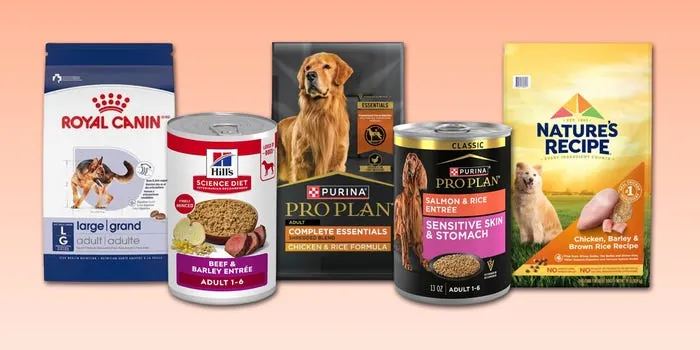
- Purina Pro Plan, Hill’s Science Diet and Royal Canin all meet AAFCO nutrient profiles for every life stage.
- A bag that says “complete and balanced” must list the specific AAFCO feeding trial or nutrient profile it passed.
- Large-breed puppy formulas keep calcium between 1% and 1.8% on a dry matter basis to protect growing joints.
- Grain-free diets only help dogs with a diagnosed grain allergy, which is actually rare in dogs.
- The right daily amount depends entirely on your dog’s weight, age and activity level — check the chart printed on your specific bag.
- Dogs with kidney or heart disease need veterinary prescription diets, not standard retail bags.
Why these brands meet nutritional standards
Purina Pro Plan, Hill’s Science Diet and Royal Canin employ full-time veterinary nutritionists to formulate their recipes. That means a specialist builds the diet around nutrients rather than just picking popular ingredients. These companies also run actual feeding trials where dogs eat the food for months while vets monitor their health.
A food that costs more per bag doesn’t automatically contain better nutrition. You’re paying for the formulation science and the safety testing behind it. AAFCO pet food labeling rules explain exactly what terms like “complete and balanced” legally require a manufacturer to prove.
When standard dog food isn’t enough
A healthy adult dog does fine on standard commercial diets, but medical conditions change the math completely.
| Situation | What changes | What to do instead |
|---|---|---|
| Kidney disease | Needs low phosphorus | Buy veterinary prescription diet |
| Food allergy | Reacts to common proteins | Use hydrolyzed protein formula |
| Large breed puppy | Grows too fast normally | Switch to large breed formula |
| Overweight dog | Standard calories cause gain | Use weight management formula |
| Heart condition | Requires specific amino acids | Ask vet about taurine levels |
| Senior dog with arthritis | Needs joint support nutrients | Choose senior mobility formula |
If your dog scratches constantly or has loose stools on a standard diet, don’t just swap flavors.
How to choose the right dog food
Follow these steps to match a bag to your dog’s needs.
- Find the AAFCO statement on the bag to confirm it fits your dog’s exact life stage.
- Weigh your dog on a home scale and use the feeding chart printed on your specific bag, since calorie density varies between recipes.
- Pick a large-breed puppy formula if your dog will weigh over 50 pounds as an adult.
- Check the guaranteed analysis panel for crude protein and fat percentages that match your dog’s activity level.
- Transition slowly over seven days by mixing 25% new food with 75% old food, increasing the new portion daily.
- Watch your dog’s stool quality during the switch, as firm stools mean the gut is handling the change well.
- Weigh your dog again after four weeks on the new food and adjust the daily amount up or down by 10%.
Mistakes that ruin a dog’s diet
- Buying grain-free food for a dog without a diagnosed grain allergy increases the risk of dilated cardiomyopathy, a serious heart condition the FDA has investigated since 2018.
- Feeding an all-meat homemade diet without added calcium causes severe bone deformities in growing puppies within just a few months.
- Ignoring the calorie count on the bag and free-feeding leads to obesity, which shortens a dog’s lifespan.
- Switching brands overnight causes vomiting and diarrhea because the gut bacteria don’t have time to adapt to new ingredients.
- Trusting marketing words like “premium” or “holistic” instead of reading the AAFCO statement leaves you buying expensive filler with no proven nutritional value.
Frequently asked questions
Is grain-free dog food safer?
No, grain-free food isn’t safer for most dogs. Grains like rice and oats provide digestible energy and essential nutrients. The FDA began investigating a link between certain grain-free diets and canine heart disease in 2018. Only use grain-free food if your vet diagnoses a true grain allergy.
How much dog food should I feed daily?
Feed the amount listed on your specific bag’s chart for your dog’s current weight, adjusting by 10% if they gain or lose weight over four weeks. Calorie counts vary widely between brands, so a cup of one food isn’t equal to a cup of another.
Can I mix wet and dry dog food?
Yes, you can mix them safely. Just count the total calories from both cans and kibble so you don’t overfeed. Wet food adds moisture, which helps dogs that don’t drink enough water on their own throughout the day.
Why is my dog not eating their food?
Sudden appetite loss lasting more than 24 hours needs a vet visit to rule out illness or dental pain. If your dog is otherwise acting normal, they might just be bored or eating treats between meals. Cut out all snacks for two days to see if hunger returns.
Does expensive dog food mean better quality?
Not always. Price often reflects marketing budgets or exotic ingredients rather than nutritional science. A mid-priced food from a company that runs AAFCO feeding trials is usually better than a costly boutique brand that only uses computer modeling.
How long does opened dry dog food last?
Opened kibble stays fresh for about six weeks if you squeeze the air out and seal the bag tightly. The fats in the food oxidize when exposed to air, making it taste stale and destroying vitamins. Don’t pour it into an unlined plastic bin.
Is raw dog food safe?
Raw diets carry a high risk of Salmonella and Listeria contamination for both dogs and the humans living with them. The CDC warns against feeding raw meat due to these bacterial hazards. Cooking meat to 165°F kills these pathogens, which raw feeding skips entirely.
Conclusion
Picking a reliable food comes down to reading the label rather than trusting the front of the bag. Stick with companies that test their recipes on actual animals, match the formula to your dog’s size and age, and measure portions by the calorie guide on your specific bag.