
A healthy adult dog thrives best on a commercial dry kibble or wet food labeled “complete and balanced” for its life stage.
Types of food to feed your dog
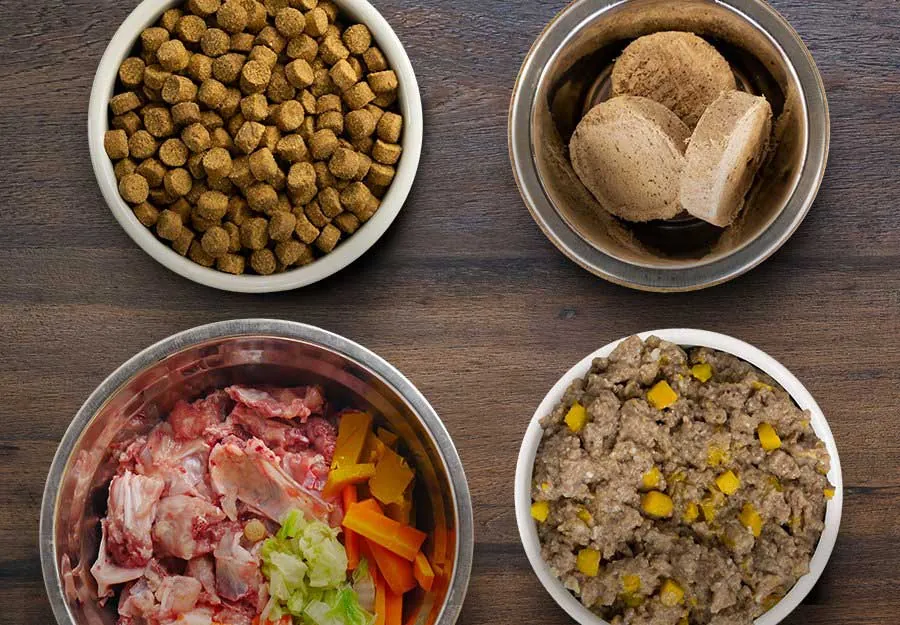
Store shelves hold hundreds of dog food options. Base your choice on your dog’s life stage, activity, and condition.
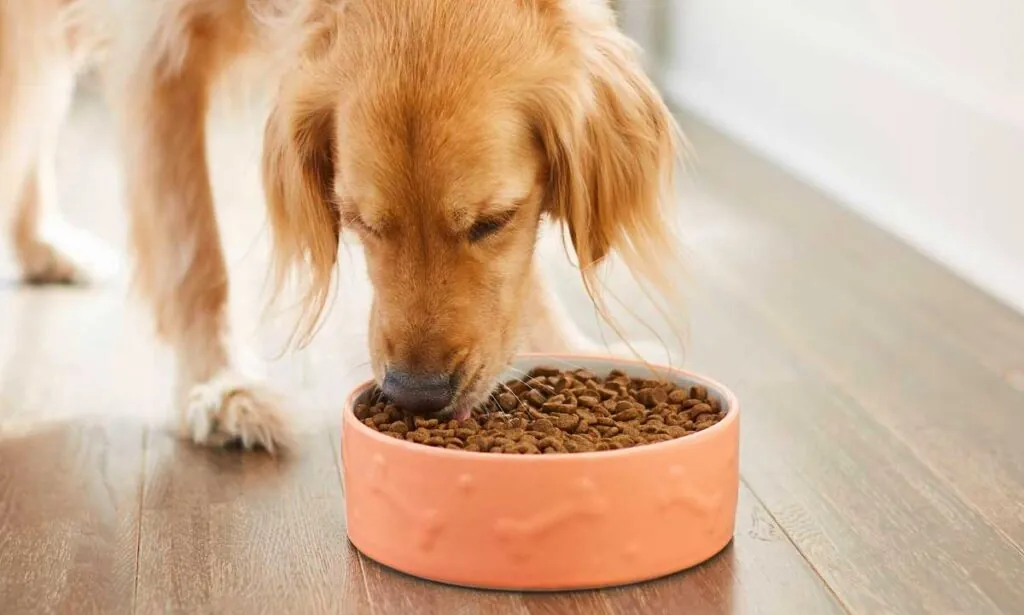
- Commercial dry kibble works best for most healthy dogs because it’s shelf-stable, cost-effective, and provides balanced daily nutrition.
- Canned wet food helps dogs that need extra hydration or older pets with missing teeth, though it costs roughly three times more per meal than dry kibble.
- Life-stage labels matter, so choose puppy food for animals under 12 months, adult maintenance for ages 1 to 7, and senior food for older dogs.
- Check the label statement, which must say the recipe meets the nutritional levels established by the Association of American Feed Control Officials (AAFCO).
- Weigh your dog monthly, because your dog’s exact daily caloric needs depend on their resting metabolic rate, which you can read directly off your veterinarian’s weight chart.
- Skip raw diets if you have small children, elderly family members, or sick pets at home due to bacterial contamination risks.
Why complete commercial foods work best
Dogs are omnivores that need a precise mix of amino acids, fatty acids, vitamins, and minerals to survive. When you feed an unbalanced diet, health problems take months or years to appear. A dog might look fine on plain boiled chicken and rice, but that mix lacks calcium, zinc, and essential B vitamins. Over time, the dog’s body pulls calcium directly from its bones to keep the heart beating.
Commercial diets solve this through nutritional guidelines set by veterinary researchers. These recipes balance the calcium-to-phosphorus ratio, which must sit between 1:1 and 2:1 to protect skeletal health.
When standard dog food choices change

Standard adult kibble works for an average, healthy house dog.
The following guide shows when the standard daily diet fails and how to adjust your approach safely.
| Situation | What changes | What to do instead |
|---|---|---|
| Puppy under 12 months | Needs higher protein and calcium | Feed dedicated puppy formula |
| Chronic kidney disease | Can’t process high phosphorus | Use prescription renal diet |
| Pancreatitis diagnosis | Can’t digest dietary fats | Switch to low-fat veterinary food |
| Severe dental disease | Chewing hard kibble causes pain | Feed canned wet food |
| Inactive, obese adult | Burns 20-30% fewer daily calories | Use weight management kibble |
| Suspected food allergy | Reacts to common protein sources | Try hydrolyzed protein diet |
How to choose and serve dog food
Follow these steps to serve food. Follow these steps to serve food safely.
- Read the bag’s small print to confirm the statement says the recipe is complete and balanced for your dog’s specific age group.
- Weigh your dog on a home scale or at the clinic to determine its exact weight in pounds.
- Check the bag’s feeding chart to find the starting daily amount, usually between 1 to 3 cups for average adult dogs.
- Divide that total daily cup amount into 2 equal portions, serving one in the morning and one in the evening.
- If changing brands, do a 7-day mix: if keeping the old food, do an immediate swap only under direct veterinary advice.
- Mix 75% old food with 25% new food on days 1 and 2 to protect gut bacteria from sudden changes.
- Combine 50% old food with 50% new food on days 3 and 4, checking stools for looseness.
- Offer 25% old food and 75% new food on days 5 and 6, reaching 100% new food by day 7.
Common feeding errors to avoid
Feeding mistakes often happen with the best intentions. Small errors repeated daily lead to expensive vet visits, chronic illness, and shortened lifespans.
- Free-feeding from an open bowl: Leaving dry kibble out all day causes steady weight gain, which leads to joint arthritis and diabetes.
- Eye-balling portions with a coffee mug: A standard mug holds up to 40% more food than an 8-ounce measuring cup, adding hundreds of surplus calories each week.
- Adding daily raw human scraps: Table scraps like fatty bacon grease or cooked bones cause sudden pancreatitis attacks and bowel punctures.
- Switching bags suddenly without a transition: Swapping brands overnight can cause vomiting and diarrhea, which may lead to discomfort.
Frequently asked questions
Can dogs eat a purely raw meat diet?
No, plain raw meat lacks essential calcium, iodine, and trace minerals. Unbalanced raw feeding causes broken bones, while pathogens like Salmonella in raw meat can sicken both your dog and human family members.
How much dry kibble should a dog eat daily?
Feed between 1 and 1.5 cups daily for a 20-pound dog, or 2.5 to 3.5 cups for a 60-pound dog. Check the exact feeding guide on your bag to match your dog’s target weight.
Is grain-free food better for dogs?
No, most dogs digest grains like rice and oats easily and safely. Grain-free foods often use high amounts of peas or lentils, which the FDA has investigated for links to heart disease in dogs.
How often should an adult dog eat each day?
Feed an adult dog twice per day, spaced roughly 8 to 12 hours apart. Feeding twice daily prevents stomach bloating, eases digestion, and keeps energy and blood sugar levels steady throughout the entire day.
Can I feed my dog human food every day?
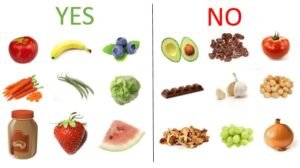
Plain vegetables like carrots and green beans are safe, but human meals shouldn’t make up more than 10% of total calories. Cooked human dishes contain excessive salt, fats, onions, and garlic that damage canine red blood cells.
What happens if I feed adult food to a young puppy?
Puppies fed adult food develop permanent bone and joint deformities. Adult kibble lacks the concentrated protein, fat, and phosphorus ratios that growing puppy skeletons require during the first 12 months of development.
Does dry kibble clean a dog’s teeth?
Dry kibble provides minimal dental cleaning because most dogs swallow kibble whole or crush it instantly. Kibble shatters at the tooth tip and can’t scrape away plaque near the gumline like daily brushing does.
How long does a bag of dry dog food stay fresh?
Keep the kibble in its original bag with the top sealed tightly, because the inner bag lining blocks oxygen and stops fats from turning rancid.
Feeding a healthy dog comes down to consistent portions of balanced commercial food rather than chasing trends. Monitor your dog’s weight, measure portions accurately, and consult your vet regarding health changes.
Conclusion
Your dog’s nutritional needs might change as they get older, so it’s a good idea to chat with your vet during your next visit. They’ll help you spot any subtle signs that it’s time to switch things up. You’ll feel much better knowing your best friend is getting exactly what they need.